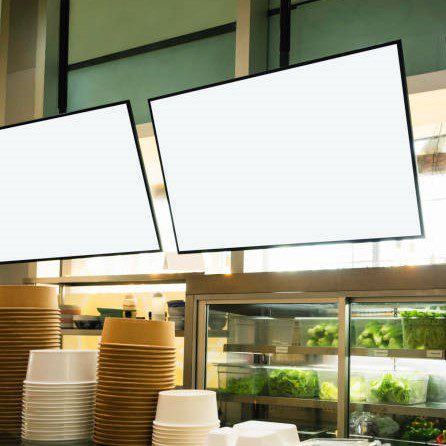
In the modern dining world, the fight for customers begins before they even sit down. Humans are naturally “visual eaters,” reacting to nutrient-rich food visuals. This concept, called “visual hunger,” drives restaurant purchasing decisions. Static menus leave gaps for imagination, but dynamic displays bridge them.
Restaurants use high-definition screens to stimulate senses and influence choices. This article delves into how dynamic food visuals drive sales, converting browsers into buyers.
1. The Science of “Visual Hunger”: Why Motion Outperforms Stillness
In cognitive psychology, “visual hunger” refers to the biological drive to look at images of food. While a photograph of a steak is pleasant, a dynamic video of a steak—showing the glistening juices under the knife—is intoxicating to the brain.
The Pre-Ingestive Response
When a customer sees motion, their brain enters a “pre-ingestive” state. The sight of melting cheese (the “cheese pull”), the condensation misting on a cold glass, or the steam rising from a bowl of ramen triggers a physiological reaction: the release of dopamine and a slight increase in salivation.
-
Static Limitation: A printed photo is a memory.
-
Dynamic Advantage: A digital video is an event. It forces the customer to experience the food in the “present tense.”
Attention Capture (The 1-Second Rule)
In a crowded fast-casual or fine-dining environment, you have roughly one second to capture a customer’s attention as they scan the room. A restaurant advertising player uses motion to break through the “visual clutter.” The human eye is naturally drawn to movement; it is a primal survival instinct. By placing motion in their line of sight, you ensure that your high-margin “hidden menu” item is the first thing they truly perceive.
2. The “Hidden Menu” Strategy: Creating Desire through Cinematic Focus
Every restaurant has items they want to sell more of—high-margin appetizers, signature cocktails, or limited-time desserts. These are often the “hidden gems” that customers overlook on a text-heavy menu.
The “Sensory Close-Up”
A high-quality digital display allows for “Cinematic Focus.” Instead of showing the entire table, the screen zooms in on the details of a specific dish.
-
The Texture of Cravings: Showing the crunch of a fried chicken crust or the velvet texture of chocolate ganache creates a tactile memory. When a customer “feels” the texture through their eyes, the price becomes secondary to the craving.
-
Highlighting the “Premium”: Use the advertising player to showcase the process—the chef’s hand torching a crème brûlée or the pouring of a rare wine. This visual narrative justifies a higher price point and elevates the item from a commodity to an experience.
3. Strategic Content Orchestration: The “Final Push” at the Point of Sale
The placement and timing of content on a restaurant advertising player are just as important as the image quality itself.
The Hesitation Intercept
The most critical moment in a restaurant is the 30 seconds a customer spends at the counter or kiosk. This is the “Hesitation Window.”
-
Dynamic Upselling: While the customer is deciding, the screen in the background should play a high-shimmer loop of a premium side dish or a refreshing drink. This acts as a non-verbal suggestion. It is the digital version of a waiter saying, “Would you like to add truffle fries with that?”—but far more persuasive because it is visual.
-
Rhythmic Content: Slow, sweeping shots of food are more effective during dinner service to create a “premium” feel, while fast-paced, high-energy montages are better for lunch rushes to encourage quick decision-making and high turnover.
4. The Hardware Advantage: Why Resolution is the “Secret Ingredient.”
A craving is a fragile thing. If the screen is pixelated, the colors are dull, or the motion is jerky, the “spell” is broken. To activate the appetite, the restaurant advertising player must meet professional-grade visual standards.
-
Color Accuracy (Vividness): If a tomato looks orange or a steak looks grey, the craving is killed. High-brightness, high-gamut displays ensure that the “reds” of the berries and the “browns” of the grilled meats are life-like.
-
All-In-One Integration: Modern systems (integrated players) allow for seamless content updates. If a “Hidden Menu” item sells out, the staff can change the display in seconds, ensuring that the visual “promise” always matches the kitchen’s “delivery.”
-
Durability in Kitchen Environments: Professional restaurant players are designed to withstand heat, humidity, and 24/7 operation, ensuring that your “silent salesperson” never takes a day off.
5. Turning Visuals into (Average Order Value)
The ultimate goal of dynamic visuals is a measurable increase in revenue. Data across the industry suggests that digital menu boards and advertising players can increase the sales of specific “highlighted” items by as much as 25% to 35%.
-
Reduced Perceived Wait Time: When customers are entertained by beautiful “food art,” they perceive their wait time to be shorter, leading to higher overall satisfaction scores.
-
Labor Efficiency: The advertising player handles the “suggestive selling,” allowing your staff to focus on speed and service without having to memorize complex upselling scripts.
-
Brand Depth: A restaurant that uses high-end visual technology is perceived as more “modern” and “hygienic,” which builds trust—the most important ingredient in any meal.
6. Conclusion: Winning the First Bite
In the “Quick Service” and “Experience Dining” industries, the first bite happens with the eyes. By utilizing the sensory power of a restaurant advertising player, you aren’t just showing a menu; you are curating a psychological journey of desire.
Motion, texture, and light are the tools of modern gastronomy. When you allow your customers to “taste” the quality of your hidden menu through a high-definition lens, you remove the barriers of hesitation. In the battle of the appetite, a static sign is a whisper, but a dynamic display is a masterpiece. It is time to let your visuals do the talking—and the selling.